MONA MUR IN CONVERSATION
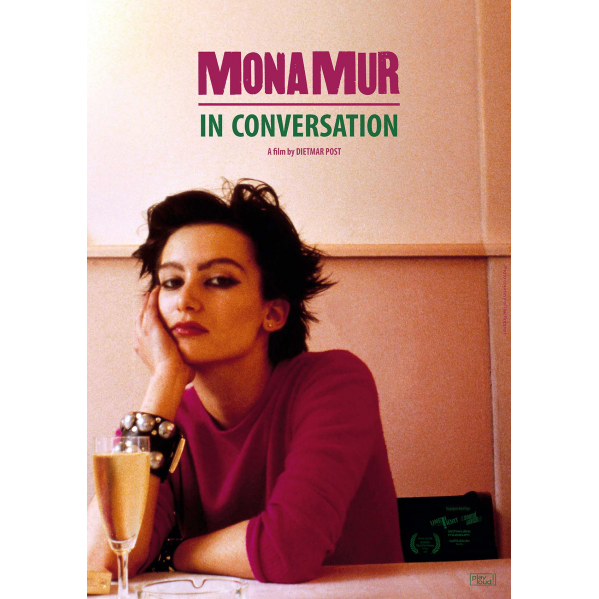
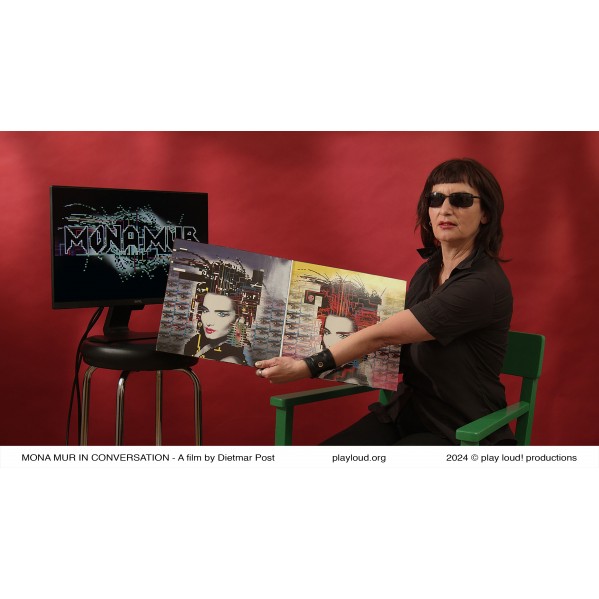
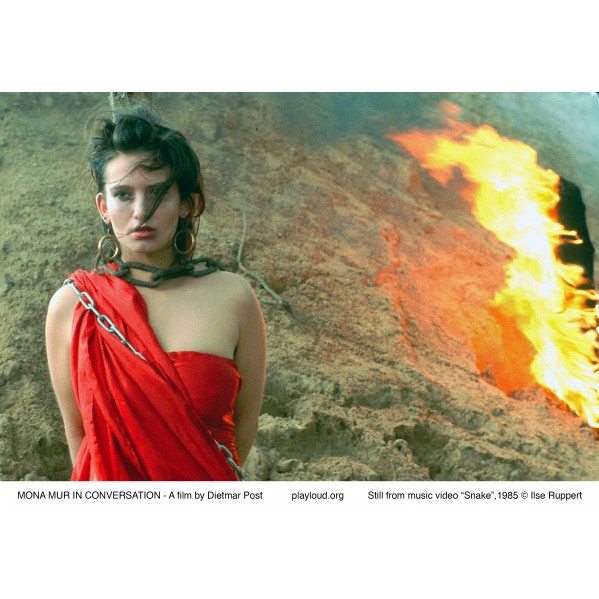
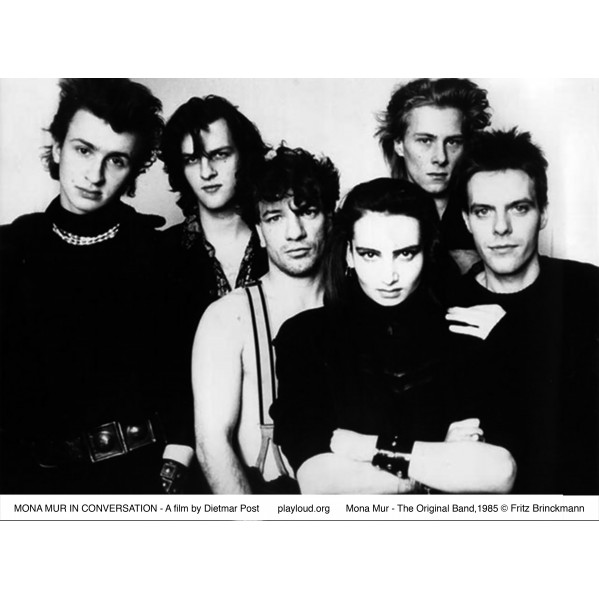
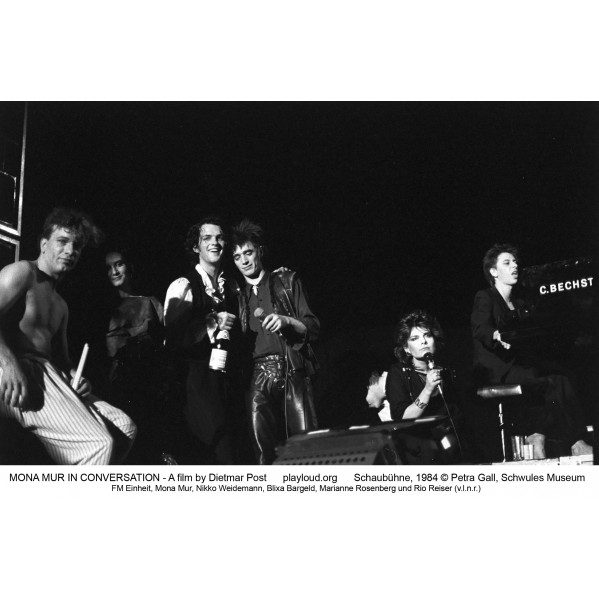
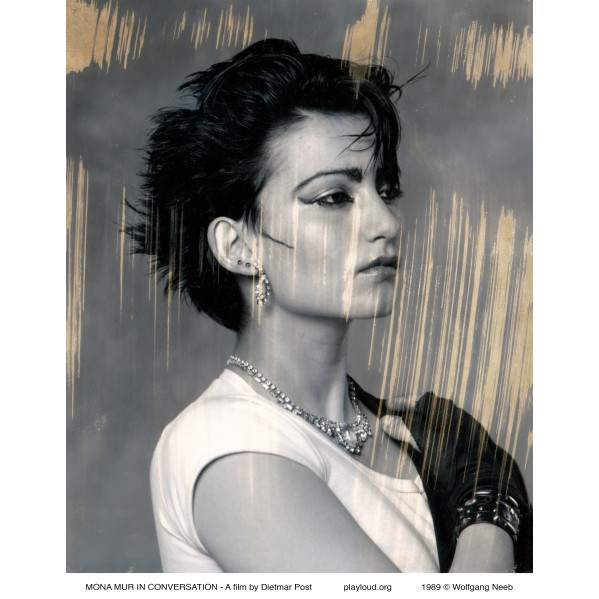
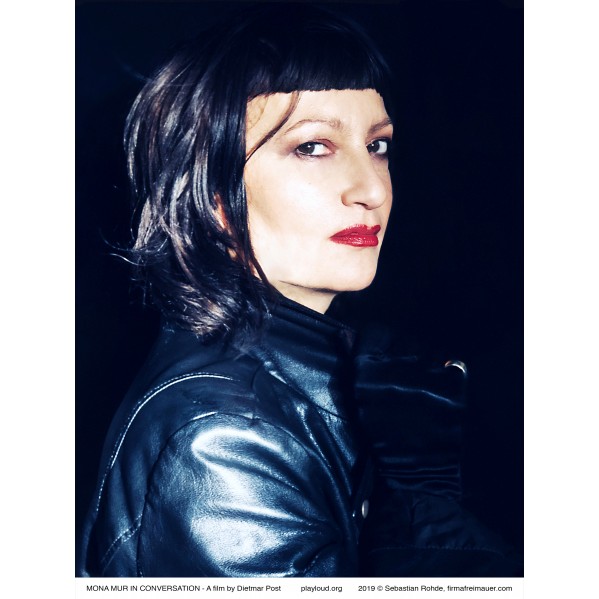
Mona Mur was born in Hamburg and became a leading figure in the German underground scene of the early 1980s. Her career has traversed many musical territories, from post-punk/industrial to electronica, from piano-based punk ballads to hard, experimental guitar music, all with her own signature style. She has collaborated with En Esch (KMFDM), FM Einheit, Mark Chung, Alexander Hacke (Einstürzende Neubauten), Nikko Weidemann, Dieter Meier (Yello), J.J. Burnel and Dave Greenfield (Stranglers), Ralf Goldkind, filmmakers Monika Treut, Elfi Mikesch, Fatih Akin, photographer Ilse Ruppert, as well as the Warsaw Philharmonic Orchestra. Mona Mur is also a composer and sound artist for films and computer games. The re-release of her early albums provides a good opportunity to revisit her previous oeuvre. Mona Mur answers questions from filmmaker Dietmar Post in a bare studio with a screen showing photos, film and music video excerpts from throughout her career, resulting in a rich portrait of a musician who has followed her own vision and overcome resistance.
A soundtrack album of the same name has been released, featuring all the songs used in the film, many of which have not been released before.
Filmmaker Monika Treut writes:
‘Mona Mur In Conversation` is so fascinating because it is multifaceted: it is about Mona Mur as a fearless woman in the male-dominated music business, but it is also a gallop through recent pop music history. It shows the many faces of Mona Mur, how she adapted and kept evolving her own creative style.
UNERHÖRT Music Documentary Film Festivals writes:
The UNERHÖRT! audience award 2024 goes to the film Mona Mur in Conversation by Dietmar Post. The 86-minute film traces the biography of the Hamburg-born artist’s work to date, the stages of self-determined creativity that began in West Germany’s early 80s post-punk scene. A cleverly constructed set-up combines speaking in front of the camera, off-camera questions and illustrative visual and audio material to create a captivating narrative of a life lived according to her own ideas without concessions – presented in a dry, straightforward, self-conscious and eloquent manner by a great artist to be (re)discovered.
The fact that the film, completed only two days before its screening, received an award from the audience in its protagonist’s hometown the day after its world premiere, can only be described as an amazing feat.
Well-known German filmmaker Elfi Mikesch writes:
"The film ‘Mona Mur in Conversation‘ shows Mona Mur as an impressive musician and artist with a thoughtful, humorous character. It reveals how the path of steadfastness is not easy. The concept for the film is perfectly realised. A green chair against a red background and a screen. Pure simplicity, no distractions, and it’s mesmerizing: Mona Mur and her story. Her life and work. The highs and the lows. The beauty. Music runs through her in every fibre, breath, rhythm, and in her voice. Her body and movements. Accented by her smile and sensuality. She’s magnetic. The live concert in the Galilee church was wonderful. A pianist at the grand, electric guitar: brilliant."
Jan Müller (Reflektor, Tocotronic) says:
“The film “Mona Mur in Conversation” recently won the audience award at the Hamburg Unerhört! Music Film Festival. That's no surprise, because when you watch it, this film has a fascinating pull when Mona Mur explains why things went the way they did for her, and why they often went wrong. So congratulations on this film from me. Keep an eye out for it.”
Stefan Pethke from the Unerhört Music Film Festival says in Corso Musikmagazin (DLF):
“Interestingly, the film about Mona Mur is more of a retrospective of what has happened in her artistic life since the early 1980s, up to the present day. And it's jam-packed. The film is an interview film. But what might sound dry is actually brilliantly done, because Dietmar Post, who made the film, is an experienced music film director. Post is incredibly good at conducting interviews. And what is perhaps an even greater talent is that he can put interviews into pictures. He has a very simple setting, but he then acts with virtuosity. Mona Mur sits opposite him, next to her is a screen. And what the two of them are talking about is always available on the screen, so to speak. But actually, you get the feeling that they are sitting there in the room talking about things. And what they are talking about is immediately available to them via the machines. And we get to be there. (…)”